


You offered to bring the bites. Your recipe makes sixteen. The guest list says fifty. Somewhere between those numbers, most people start multiplying everything in sight, and that is usually where a finger food party goes sideways.
The fix isn't better arithmetic. It's working out portions first, then treating the recipe as a plan rather than a number to triple.
Work Out How Much to Make Before You Touch the Recipe
Start from bites per guest, not from the recipe's yield. As a rule of thumb for a two-hour party where finger food isn't the meal, plan five to six bites per person. If the party runs three hours or overlaps a mealtime, plan eight to ten. If the bites are standing in for dinner, expect twelve to fifteen across at least three substantial items. Add a small cushion, ten percent is plenty, and round to whole pieces or whole trays.
Then do the total. Fifty guests at six bites each is three hundred pieces. That sounds intimidating until you divide it: five different items at sixty pieces each. Suddenly it's a shopping list.
Two habits keep that math honest:
- Fewer varieties, more of each. Three to five items is comfortable for a host who also wants to talk to people. Eight is a production line.
- One heavy item, several light ones. A slider carries more weight than a cucumber round. If most of your menu is delicate, guests will eat twice as many and still be hungry.
Multiplying a Recipe Is Not the Same as Scaling It
This is the part that catches good cooks. Doubling a recipe for a filling or a batter is not the same as doubling every line on the card.
Salt, baking powder, baking soda, cayenne, and strong dried spices are the ones to watch. In most doughs, batters, and fillings, they behave better at roughly three-quarters of the multiplied amount. A doubled recipe does not want double the salt; add about one and a half times, then taste. You can always add more. You cannot take it out.
Eggs and thick liquids are easier to handle by weight. One large egg is about fifty grams, so if a doubled recipe calls for three eggs, you're working with roughly 150 grams. That matters when you're scaling by two and a half or three and a half and the numbers stop coming out whole.
Fats, oils, and liquids scale cleanly, and so do most base ingredients: flour, cheese, cream, ground meat, bread, vegetables.
The safest habit of all is a test batch. If you've never made the recipe at volume, make a quarter of it a week ahead. You'll learn how the dough handles, how long it actually takes, and whether the seasoning needs adjusting, all with no guests in the room.
Turn the Recipe Into a Shopping and Prep Plan
Before you shop, rewrite each recipe in one column with the multiplied amount beside it, then break it into sub-recipes. This is what makes a fifty-person order feel manageable.
- Total every ingredient across the whole menu. Four recipes each calling for two tablespoons of butter is one stick, not four, and one trip down the aisle instead of four.
- Build the pieces, not just the batches. Sixty bacon-wrapped dates means sixty dates, thirty slices of bacon cut in half, and sixty toothpicks. That list is what you actually buy and what you actually do.
- Sort the work into three buckets: day before, morning of, last hour. Anything with a firm texture, such as meatballs, quiche, marinated vegetables, or most fillings, belongs in the first bucket. Anything that crisps or wilts belongs in the last.
- Check your containers. Every sub-recipe needs somewhere to live, and your fridge has a fixed number of shelves.
If that list looks long, that's the point. It's much shorter than the list you'd be writing at four in the afternoon on party day.
Cook in Batches, Not in One Enormous Bowl
Two or three normal-sized batches beat one giant one almost every time. Mixer bowls overflow. A four-quart container of filling takes hours to chill through; two two-quart containers take far less. Dough that sits while you set up the next thing starts behaving differently. And you can taste and adjust each batch as you go.
The same logic applies to your oven. Count the actual throughput before you commit to a menu. If one tray needs eighteen minutes and you have five trays, that's an hour and a half of baking before you account for rotating pans or opening the door. Choose recipes that fit the equipment you own, or make them ahead and reheat.
Where Big Batches Fall Apart
Most scaling disasters happen in assembly and holding, not in the mixing.
- Fried food. Fry in batches and keep finished pieces on a rack in a low oven, around 200°F, rather than stacked in a bowl where steam destroys the crust.
- Crisp meeting wet. Crostini, chips, and canapés with moist toppings should be assembled within an hour or two of serving, or kept as separate components and built as guests arrive.
- Skewers and tiny assembled items. Quick at thirty pieces, demoralizing at three hundred. Choose them for a crowd of fifty only if you have help.
- Temperature control. Perishable food shouldn't sit out more than about two hours, and less if the room is warm. Keep cold items over ice until serving, hold hot items in a covered pot or low oven, and put out smaller platters you can refill instead of one enormous one that sits all evening. When in doubt about something that's been out, throw it out. If guests have allergies or medical conditions, ask them directly rather than guessing.
Spread the Risk Across Cooking Methods
Fifty guests and five recipes that all need a 425°F oven is a scheduling problem you cannot solve. Build the menu across formats instead.
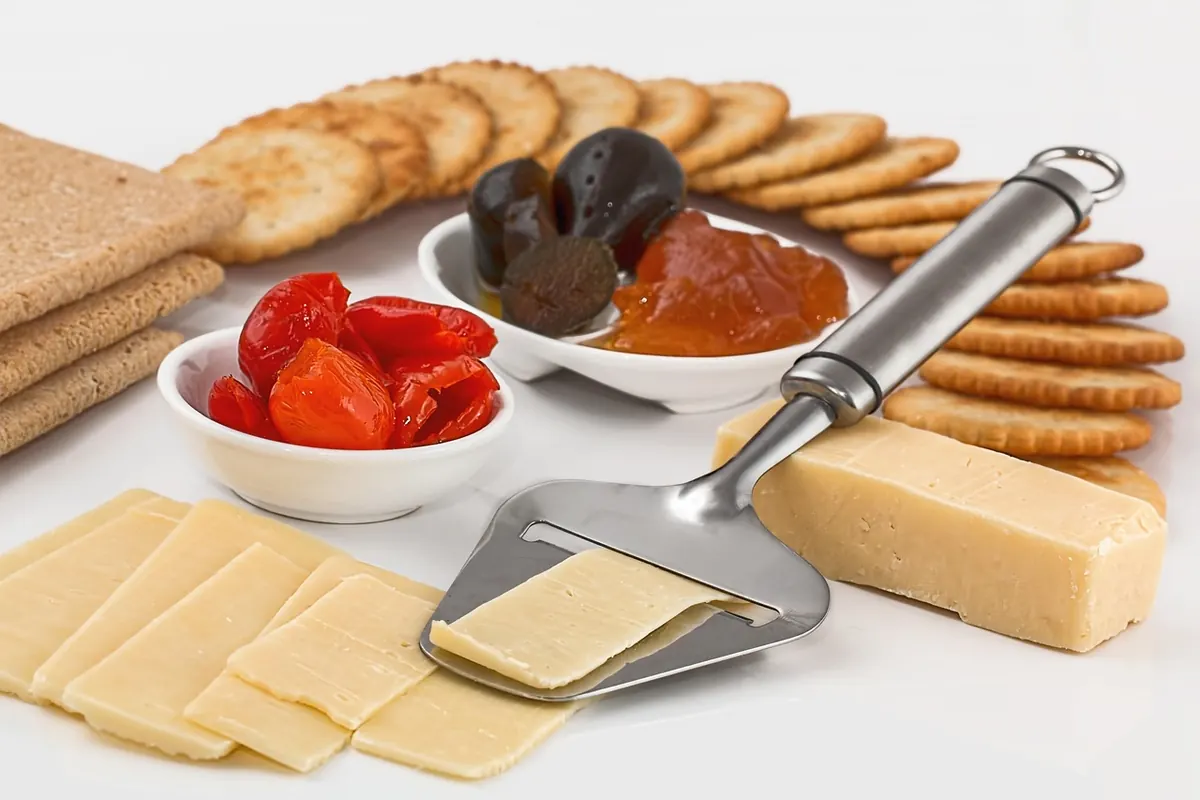
- One cold or no-cook item: marinated olives, crudité, a cheese board
- One room-temperature item: deviled eggs, frittata squares, marinated skewers
- One stovetop item: meatballs, dumplings, a warm dip
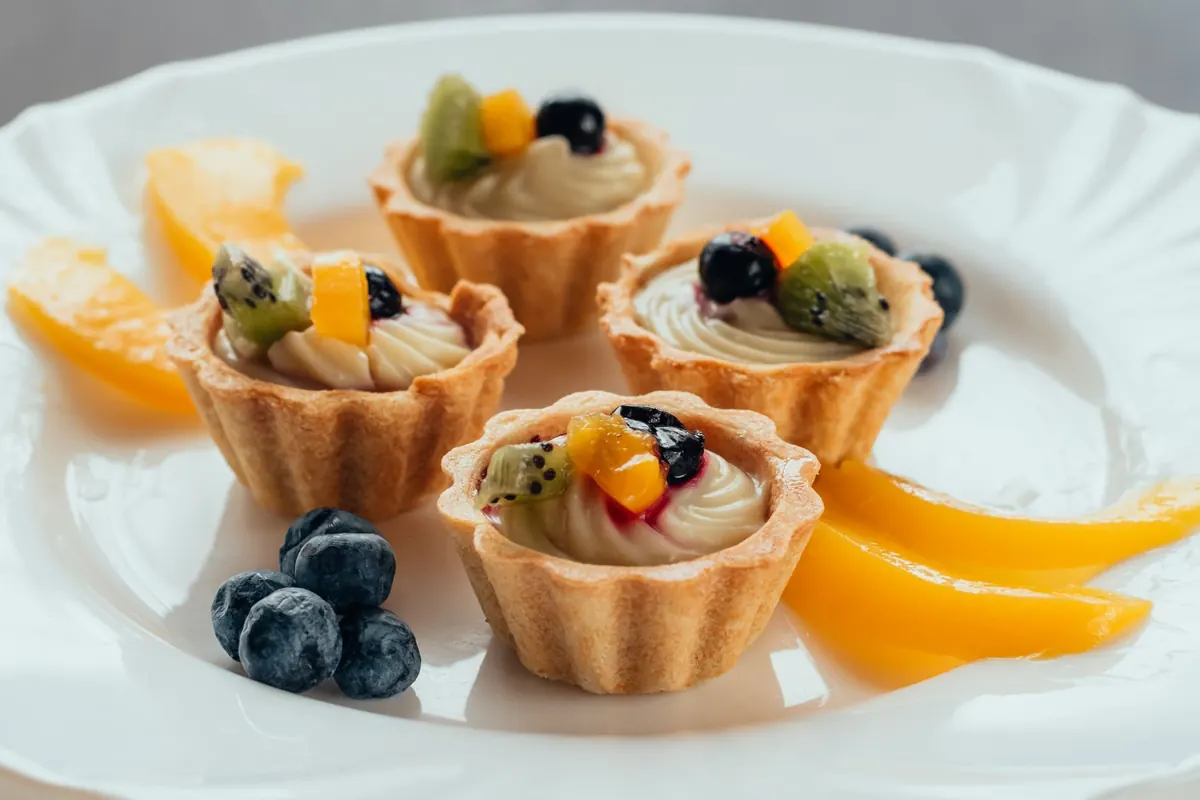
- One baked item: tarts, puff pastry bites, pinwheels
Photo: stevepb / Pixabay